
Analog Spaces for Modern Life
A Design Guide for slowing down at home.
Modern life is loud in deceiving ways. Notifications stack, screens multiply, attention fragments, often without us noticing when it happens.
The response doesn’t need to be dramatic, nor does it require rules, detoxes, or declarations. More often, it’s spatial. A room that asks less of you and gives more back. A place where focus returns naturally because nothing competes for it.
Analog spaces aren’t about rejecting technology. They’re about choosing where attention lives, and shaping moments at home that support presence, depth, and ease.
This guide explores how to design those spaces with intention, restraint, and material clarity.

Image via Pinterest
What Makes a Space “Analog”
An analog space is defined less by what it excludes and more by what it prioritizes. It’s designed around a single primary action, reading, writing, listening, resting, and it relies on materials that feel familiar and grounding. Objects have weight. Surfaces invite touch. Items are chosen because they’re used, not displayed.
Most importantly, these spaces reduce visual and mental noise. Fewer decisions. Fewer inputs. A quieter rhythm that reveals itself over time rather than announcing its presence.
The Core Principles

Image via Pinterest
Singular Purpose
Every analog space begins with clarity. One dominant function, one singular purpose.
A chair meant for reading, not working. A desk meant for writing, not collecting. A bedroom designed for rest, not storage. When a space tries to do too much, focus dissolves, objects accumulate, and the room becomes background. Clarity of purpose creates ease. You enter the space already knowing how to use it.
Material First
Analog spaces support tactile experiences, making material choices essential. Wood that shows grain and wear, linen that softens with use, down feather seating that hugs around you. Materials that absorb light rather than reflect it add warmth without decoration and depth without excess.
Patina matters here. Not everything should look new. Wear is evidence of repetition and life, not a flaw. Choose materials that improve as they age.
Minimal Clutter
The visual calm of analog spaces is not minimalism, it’s everything having a place.
Fewer objects, clearly housed. Storage that’s deliberate and part of the ritual.
Analog spaces work best when nothing feels temporary or unresolved. Tools, books, and personal items should be easy to reach and just as easy to return. Restraint here is functional, not aesthetic.
Layered Light
Light should support the activity, not dominate the room. Ambient light establishes mood, task light supports focus, and low secondary light softens the space in the evening.
Lamps are preferable to overheads whenever possible, especially when they’re warm, directional, and intentionally placed. Layered light creates intimacy and allows the room to shift naturally throughout the day. Uniform, harsh lighting flattens experience, while contrast and shadow give analog spaces depth.
Analog Spaces by Type
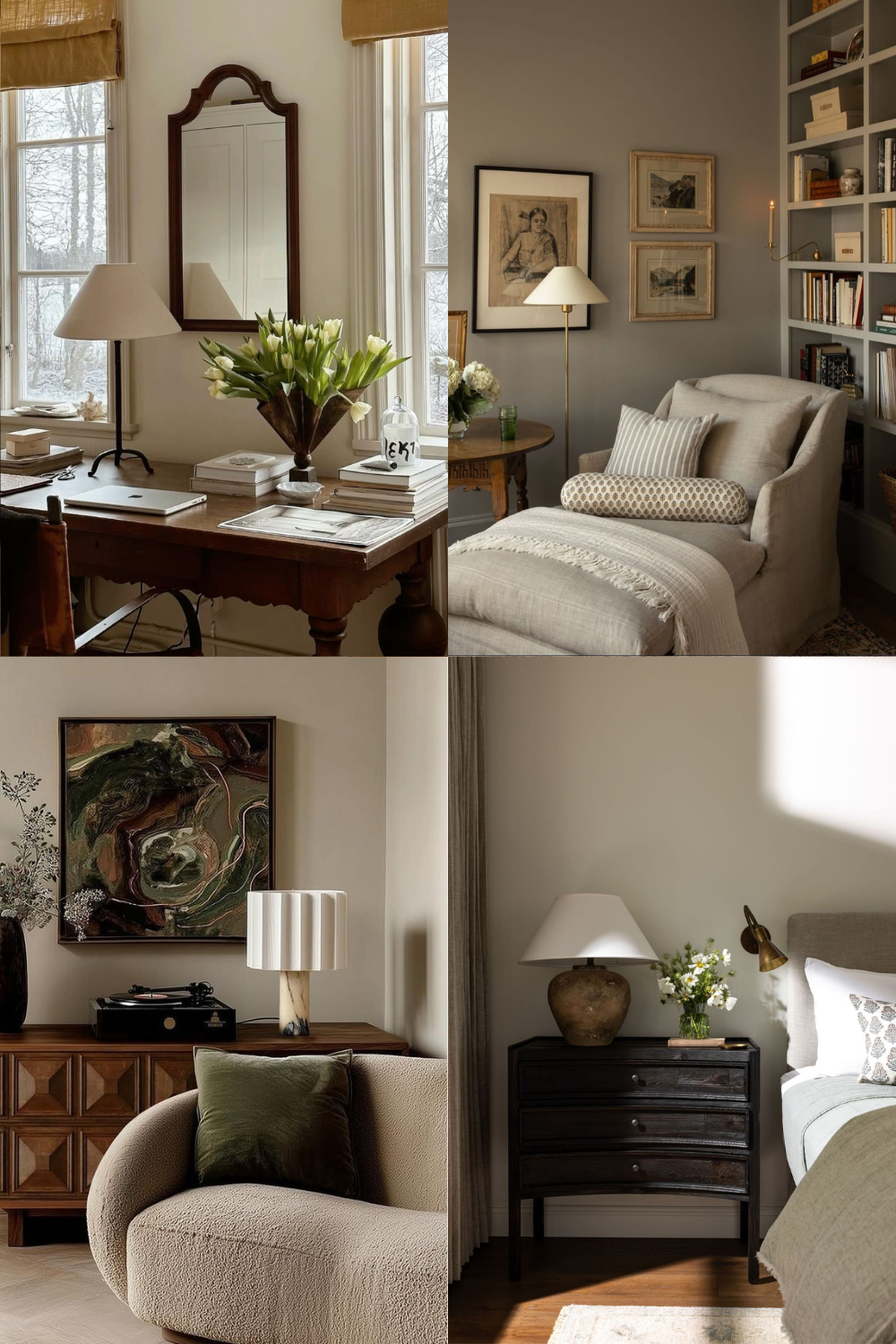
The Reading Corner
One chair worth settling into, scaled to feel slightly enveloping. Light placed at shoulder height or above, positioned for long stretches rather than quick glances. A side table that holds a book and a cup, nothing more.


The Writing or Study Nook
A desk that resists sprawl, with clear edges and just enough surface area. Paper storage that’s visible and intentional, trays, drawers, shelves that create hierarchy. Tools kept few and familiar, seating that encourages pauses.


The Listening Space
Furniture oriented around sound rather than screens. Candle flames dancing to your favorite album. Seating arranged for stillness, with no competing focal points.


The Restorative Bedroom
Clear nightstands, anchored lamps, soft tactile materials. Storage that keeps surfaces quiet, lighting that signals rest as the default state.


What to Remove
Designing analog spaces is often more about subtraction than addition.
Remove screens as visual focal points.
Remove excessive task lighting and harsh overheads.
Remove decorative objects that don’t engage the senses.
Remove furniture chosen for trend or scale rather than use.
What remains should feel necessary, familiar, and considered.alone.
Closing Thought
Analog spaces don’t ask you to escape modern life. They offer places where attention can land, linger, and recover, where presence becomes the default rather than the effort.
Over time, these spaces tend to become the most used rooms in the house, not because they impress, but because they feel right.
Pin this guide for later ↓

